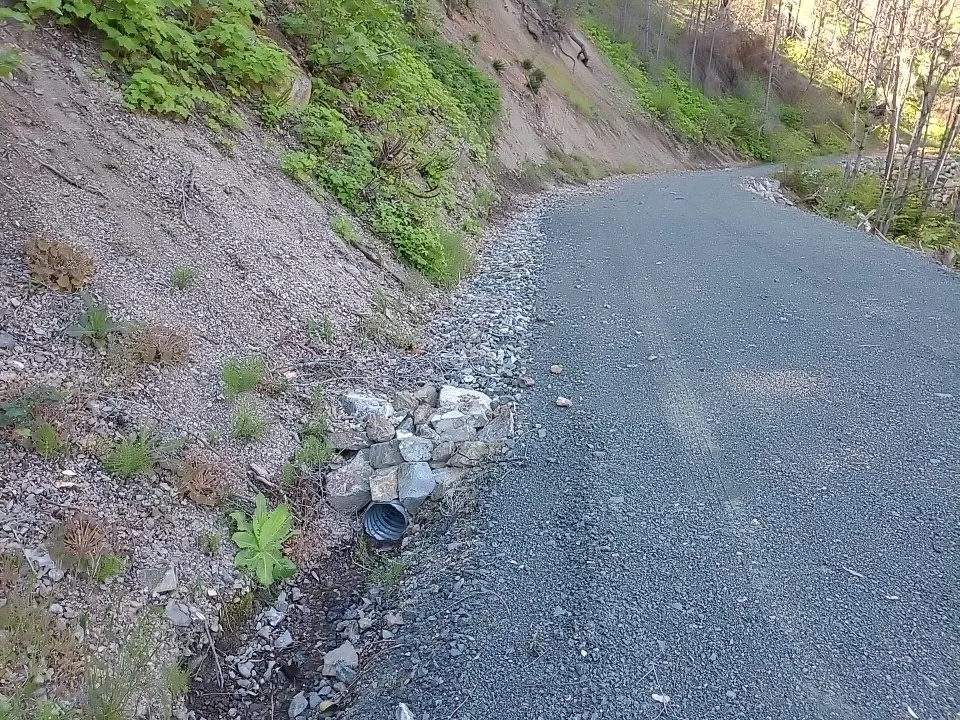
Assess the crossing, not just the pipe
A blocked inlet is different from a crushed or undersized pipe. The assessment should consider condition, alignment, cover, bedding and erosion at both ends. A public-road entrance may need approval from the agency responsible for that right of way before excavation or replacement.
Signs to look for
- A pipe is crushed, rusted or blocked
- Water crosses over the driveway
- The entrance settles above the pipe
- Erosion forms at the inlet or outlet
- A new access needs a drainage crossing
Prepare the crossing and support the pipe
- 01Review the water path, elevations and crossing
- 02Coordinate required approval for work at a public road
- 03Excavate and prepare stable bedding
- 04Place the appropriate pipe for the assessed site
- 05Backfill, compact and protect the inlet and outlet
What affects culvert replacement work
Existing pipe conditionRequired pipe type and lengthFlow and site geometryDepth, bedding and coverTraffic, access and permitting
Compare materials and scope with the gravel and road-base guide.
Questions about this work
Can a damaged culvert be repaired?
Minor inlet, outlet or blockage issues may be repairable. A crushed, badly corroded, undersized or misaligned pipe may need replacement after the site is assessed.
Do I need approval near a county road?
Work that changes an approach or drainage within a public right of way may require approval. Bannock County publishes Standard Approach forms through its Road and Bridge department; requirements should be confirmed for the specific address.